A buyer comparing copper–aluminium terminals needs to resolve two separate questions: will the proposed part fit the connection, and is the evidence relevant to the performance required? A manufacturing-process name does not answer either question on its own. Keep geometry, application and verification in the same enquiry.
Start with the two sides of the interface
Identify what connects to each end, the material information available, the relevant conductor or terminal dimensions, the mounting arrangement and the specified duty. Share the drawing revision and any restrictions on the available installation space. Do not infer the current rating of a new geometry from a visually similar terminal.
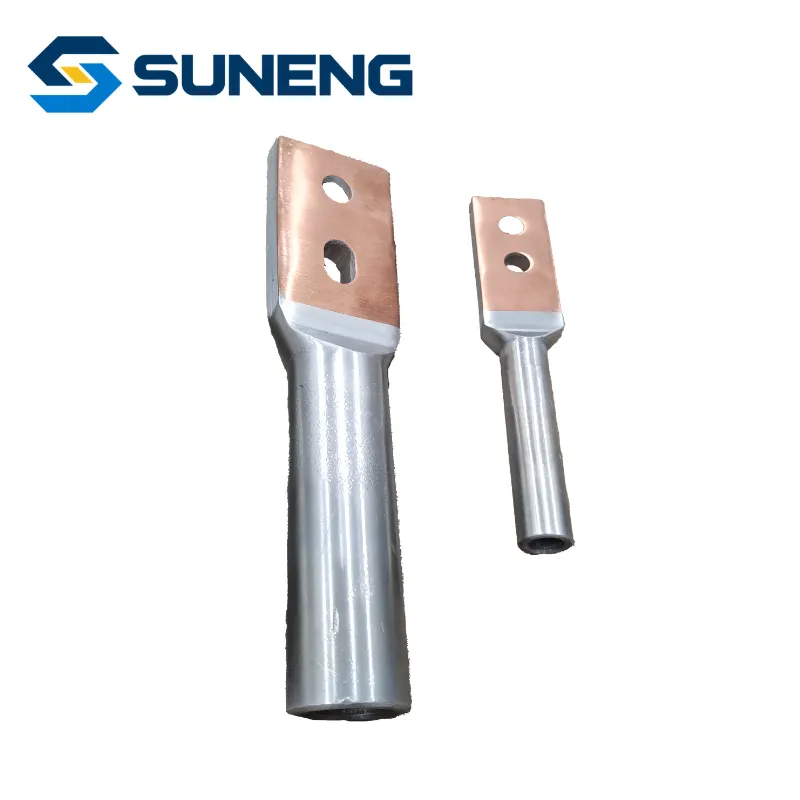
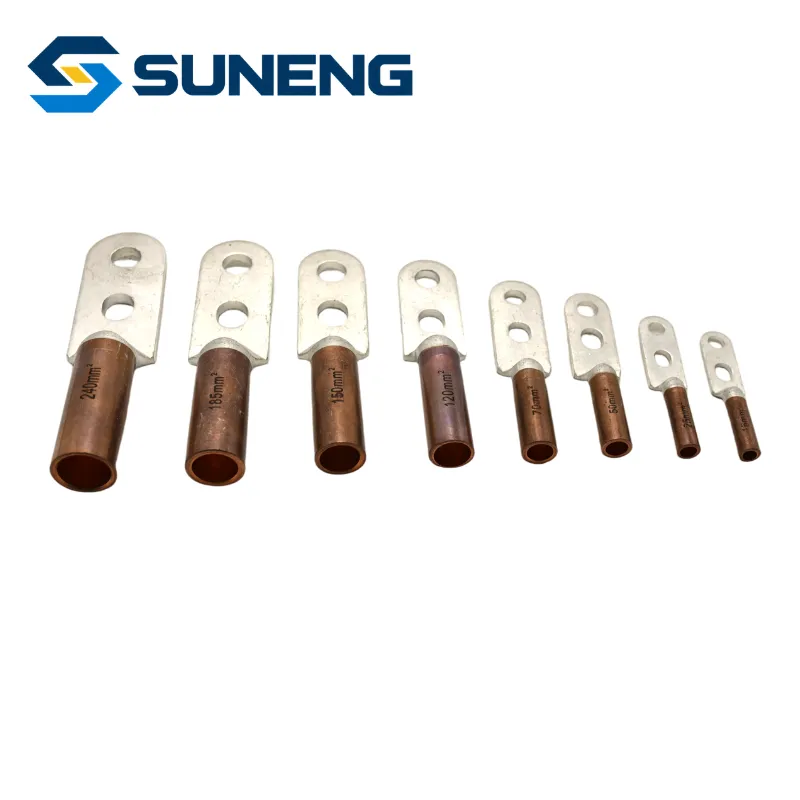
SUNENG’s SYG-ZQ range uses a copper–aluminium metallurgical bonding route that is available for batch production. The route can be reviewed for other copper–aluminium transition forms. A different form, however, is a development requirement: geometry, processing and validation must be considered for that part rather than inherited from the name of the process.

Click play to load the YouTube player. If playback is unavailable, use the YouTube link.
Ask what the record actually identifies
| Evidence item | What the buyer should confirm | What it does not establish by itself |
|---|---|---|
| Sample identity | Model, dimensions, material description and a traceable relationship to the offered product. | That every size and custom variant has been tested. |
| Resistance record | Measurement conditions, units, sample identity and the reported values. | A percentage improvement over a different product without a comparable baseline. |
| Temperature-rise record | The documented test conditions and the sample under test. | A universal result for other assemblies or service conditions. |
| Bending or mechanical evidence | The sample, procedure and acceptance basis behind the statement. | Service life or failure probability from a photograph or a single demonstration. |
Read the SYG records with the naming explained
The available SYG resistance and temperature-rise records are original in-house records supplied by SUNENG. The record sheets use SYG model names; SYG-ZQ is our internal product designation. For an order, request the sample/model correspondence so the evidence can be tied to the part offered.
These records are part of the review package, not an independent comparison proving a fixed advantage over every brazed product. They should not be presented as third-party certification. When a project requires an independent test, specific acceptance criteria or a directly comparable baseline, agree that requirement before release.
Compare like-for-like rather than comparing slogans
Ask competing offers to identify the part geometry, material, test basis and quoted supply scope. If those differ, keep the results separate until a responsible technical review establishes whether comparison is meaningful. Claims about lower resistance, lower temperature rise, strength and service life refer to different outcomes; do not combine them into an undefined “overall improvement” number.
If a process change is proposed for an existing connection, document which features and performance requirements must stay the same. Agree whether the work needs dimensional review, a production-intent sample, a particular test programme or a combination. The exact acceptance basis belongs in the project documents, not in an assumed marketing promise.
Turning a non-standard transition into a reviewable enquiry
- Provide the mating interfaces, conductor/terminal information, fixed dimensions and installation envelope.
- Identify the specified electrical and mechanical requirements and any documents the customer must submit for approval.
- State quantity, destination and whether repeat orders or additional sizes are anticipated.
- Separate shape approval from approval of the production material, joint and performance.
- Ask the quotation to list included samples, records and any additional verification still needed.
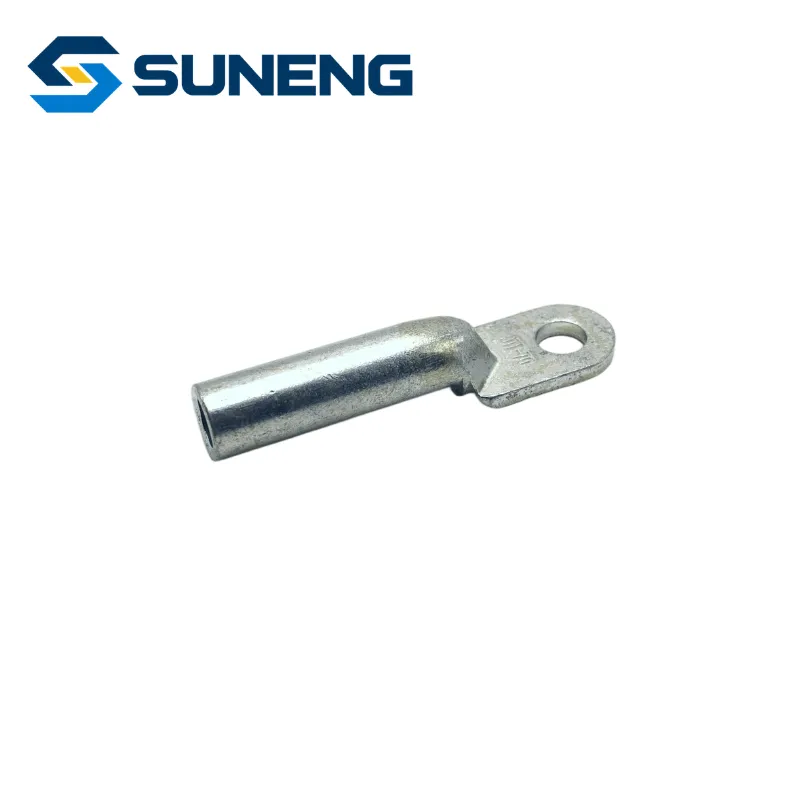
Review the SYG-ZQ-240 terminal product page and original sample comparison photographs as starting points. A different bimetallic terminal form remains a separate product reference; inclusion here does not mean it uses the same process or shares the same test results.
Can the process be applied beyond one terminal shape? It is a route we can evaluate for other copper–aluminium connection forms. Feasibility and evidence for a new part still require review.
Can you guarantee a fixed percentage gain for my installation? Not from the available records alone. A numerical comparison needs a defined metric, matching conditions and a relevant baseline.