Send the basic requirement now. Drawings, BOMs and specifications help us respond more precisely.
From Thermal Prototype to Production: A Practical Approval Plan
Updated 16 October 2026
Moving from a thermal component prototype to repeat production is not only a matter of making the same part again. The drawing revision, joining route, inspection evidence, interfaces and change-control rules need to be clear before the first approved sample becomes a production reference.
Freeze the requirements that cannot move
Start with the equipment interface: contact area, mounting pattern, ports, envelope, critical dimensions and required surface condition. Separate fixed requirements from open design decisions. This prevents a supplier from treating an unresolved thermal or mechanical question as a production detail.
Use the sample to verify the right things
A useful sample plan may include material confirmation, dimensional inspection, flatness, pressure or leak checks, flow checks, cleanliness and thermal validation. The exact scope depends on the application. Record the test condition and pass criteria so a later batch can be compared with the approved reference.
Control the manufacturing route
Document the approved construction, machining features, joining process, finishing steps and inspection datums. If the route changes from embedded tube to brazed or FSW construction, that is a design review item, not an invisible substitution. The liquid cold plate range shows several possible routes, while the final production route must follow the project approval. See the thermal manufacturing page for the wider development scope.
Plan quantity and evidence together
Prototype quantity, expected annual demand, delivery destination and required reports affect how the part is prepared for repeat production. Clarify whether every unit needs a record or whether a defined sampling plan is acceptable. Include packaging, cleanliness and protection of machined or sealing surfaces where they affect installation.
Start the review with the information available
A complete drawing is useful but not always available at the first discussion. Send a reference part, marked-up sketch, heat-source layout, coolant or airflow conditions, target quantity and key constraints. SUNENG can review the open items through the OEM/ODM development route and discuss a practical sample and approval plan.
Updated 16 October 2026
A cold plate quotation becomes difficult to compare when the supplier receives only a plate outline and a target price. A useful RFQ explains the heat source, the coolant loop, the interfaces and the evidence required for approval.
Include the thermal duty
State the heat load, duty cycle, component temperature limit and the contact area that must be cooled. If several modules share one plate, provide their positions and individual loads. A thermal simulation or test target can help, but identify which values are measured, calculated or still under review.
Include the mechanical interfaces
Overall length, width, thickness and weight limit
Mounting holes, threads, locating features and keep-out zones
Contact face flatness, roughness and coating requirements
Inlet and outlet position, port size and connection type
Space for hoses, fittings, seals, sensors and service access
Describe the coolant and operating conditions
Identify the coolant, concentration, operating and peak temperature, available flow, working pressure, pressure-drop limit and expected operating hours. State whether the plate must be drained, cleaned or installed in a particular orientation. These details affect material compatibility, channel design and testing.
Separate the sample from the batch
Give the prototype quantity, target annual or project quantity, required sample date and batch delivery schedule separately. Ask the supplier to list tooling, fixture, sample, inspection and production costs as separate items. Confirm which drawing revision controls the sample and how approved changes will be handled.
Define the approval evidence
Ask for the proposed inspection scope before production. Depending on the application, this may include dimensional records, flatness, pressure or leak checks, flow and pressure drop, cleanliness and thermal performance. The acceptance method and test conditions must be agreed rather than assumed from a general product description.
A short RFQ template
Please review the attached cold plate drawing and thermal requirements. Confirm the proposed construction, material, channel or tube route, ports, critical dimensions, inspection scope, sample schedule and production lead time. List all assumptions, exclusions and information still required for approval.
A transformer quotation based only on kVA and voltage ratio leaves major project assumptions unresolved. For sites in Central Asia, check the actual elevation, temperature range, loading and installation arrangement early. A city, mountain site and enclosed industrial building in the same country can require different design reviews.
Use one site-condition sheet for every bidder. Ask each supplier to return its proposed configuration, confirmed operating conditions and deviations against that sheet. This makes it easier to compare a standard offer with a project-specific design.
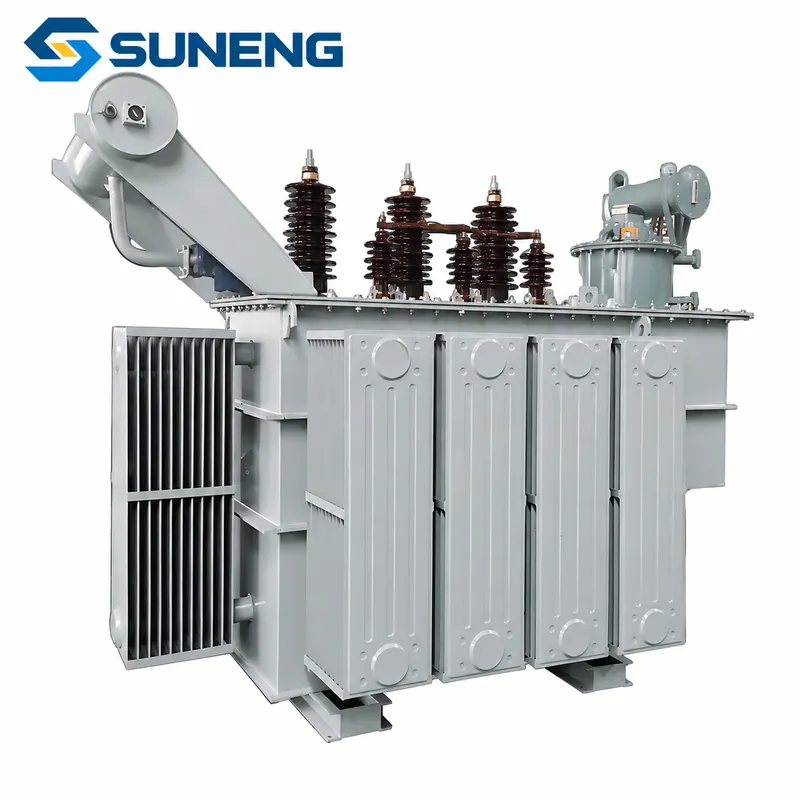
Product reference for the selection discussion; confirm the exact model, drawing and application before ordering.
Define the location as an operating condition
Provide the site’s elevation and the ambient temperatures specified by the project, including the required averaging periods where relevant. Distinguish minimum operating temperature, storage temperature and cold-start conditions. Add indoor or outdoor installation, ventilation restrictions, dust, moisture, snow exposure and other conditions identified by the project engineer.
Higher elevation can affect air cooling and external insulation requirements. Low temperature can affect insulating-liquid behaviour, seals, mechanisms and accessories. The required response depends on transformer design and service conditions; ask for a documented review instead of applying a single derating percentage to every transformer.
Requirement
Buyer input
Response to request
Site conditions
Elevation, ambient limits, installation arrangement and environmental exposure.
Accepted conditions and any design or rating changes.
System
Capacity, frequency, voltage ratio, winding connection, neutral and earthing requirements.
Proposed ratings, vector group and terminal arrangement.
Loading
Expected load profile, future loads, motor starting or nonlinear loads where relevant.
Duty assumptions and information still needed for the design review.
Voltage adjustment
Required tapping range and whether adjustment is needed during operation.
Tap-changing arrangement, controls and accessories.
Acceptance
Applicable specification, loss limits, impedance requirements and tests/documents.
Guaranteed values with stated conditions, verification and exceptions.
Installation
Foundation, terminal interfaces, enclosure, access and transport restrictions.
Outline drawing, mass, lifting points and interface dimensions.
Ask what the offered capacity means at your site
Confirm whether the quoted capacity applies under the supplied site conditions and cooling arrangement. If fans or other auxiliaries are needed to achieve a rating, identify their power supply, control and operating requirements. A nameplate capacity quoted without its operating assumptions can make two offers appear equivalent when they are not.
For a transformer inside a room or prefabricated enclosure, provide the ventilation and layout information available. The outdoor weather report is not necessarily the air temperature around an enclosed transformer. Clarify which party will check the complete enclosure and cooling arrangement.
Separate a replacement from a new installation
For a replacement, send the existing nameplate and drawings as well as the new operating requirements. Check impedance, winding connections, terminal layout and protective arrangements with the project engineer. If parallel operation is planned, identify the other transformer and the intended operating scheme; matching kVA alone is insufficient.
Confirm cable or busbar entry positions, terminal heights, neutral connection and accessible clearances before approving the outline. A transformer can meet the electrical specification yet require costly changes to the foundation or connections if these details arrive too late.
Make the quotation comparison useful
Create a deviation register with four columns: requested requirement, offered value, reason for deviation and approval status. Include the complete accessories list, documentation language, packing, transport dimensions and commissioning support. Compare losses only when the rating, test conditions and specified basis are aligned. Request clarification of broad labels such as “low loss” or “suitable for cold areas”.
Before manufacture, approve the data sheet, outline and agreed inspection plan. Confirm which routine test records will accompany the supplied unit and which additional tests are separately required. Our document-review checklist helps organise that acceptance package.
SUNENG supplies transformer configurations and associated electrical components for project requirements. Send the site-condition sheet, electrical duty and installation drawing. Mark missing inputs so the quotation can identify what is confirmed and what still requires engineering review before release.
A 3D-printed sample can answer an important question quickly: does the proposed shape fit the available space and match the intended interfaces? It does not automatically prove conductivity, insulation, temperature-rise performance or production strength. Treat the printed sample as one stage in a controlled path from concept to first article.
This workflow is useful for small fittings, terminal blocks, brackets and other custom parts. It is not a substitute for engineering validation of a complete transformer, ring main unit or other large electrical assembly.
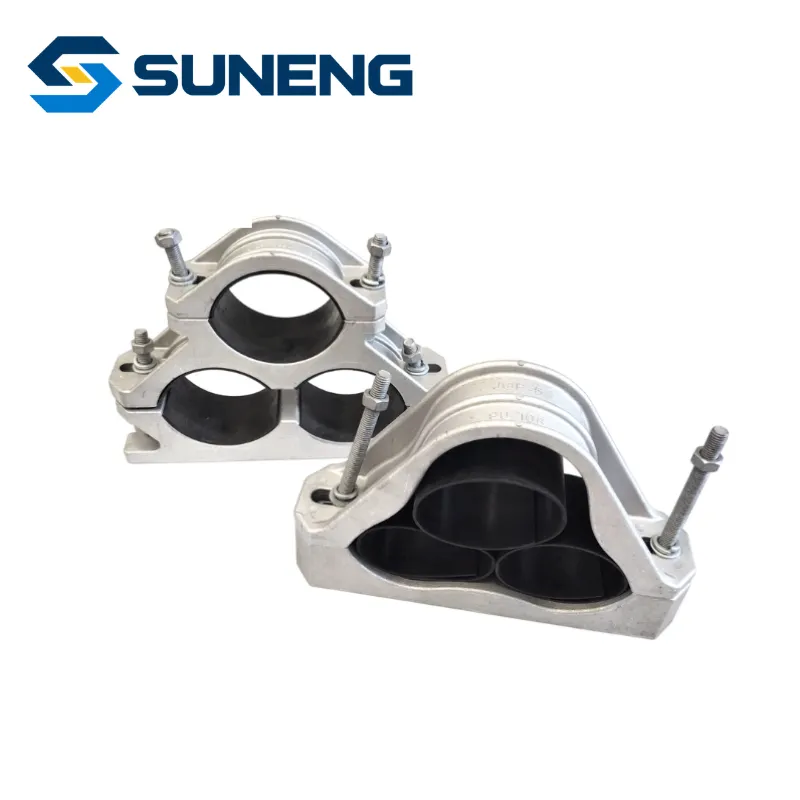
Manufactured cable-fixing clamp product reference, not a 3D-printed sample or evidence of a particular prototype project.
Give each sample one clear job
Stage
What it can prove
What it cannot prove by itself
3D-printed appearance sample
Overall shape, visual proportion, access and obvious interference.
Production material properties, conductivity, insulation, temperature rise or final finish.
Assembly or fit sample
Mounting centres, mating parts, cable approach and service access.
That a different production material or process will retain every performance requirement.
Functional sample
The defined function under agreed test conditions.
Unspecified duties, untested environments or a broader product family.
First article
Compliance with the frozen drawing, material, finish and acceptance plan.
Future production lots unless controls and inspection are maintained.
Freeze the interfaces before approving the shape
Mark the dimensions that cannot change: hole centres, conductor entry, mating face, bolt access, clearance and installation direction. Add tolerances to the drawing rather than approving a printed part by visual comparison alone. If a dimension is not yet known, record it as an open item with an owner and due date.
Use photographs and the printed part to review access and interference, but keep the approved CAD or drawing as the dimensional authority. A print may shrink, warp or use a process-specific finish. Its purpose is to expose design problems early, not to silently redefine the production geometry.
Separate fit checks from electrical and mechanical validation
For an electrical part, define the checks that require the final material and production process. Depending on the part and project, that may include conductor contact, insulation, temperature rise, dielectric performance, mechanical strength, surface finish or environmental resistance. Agree the appropriate checks with the project engineer; do not treat a visual sample as evidence for them.
Approval item
Record before release
Status to sign
Design identity
Part number, drawing revision, CAD revision and sample stage.
Approved or returned with marked changes.
Material
Production material, grade, treatment and insulation or plating.
Confirmed against quotation and drawing.
Critical dimensions
Measured values, tolerances, hole pattern, mating faces and envelope.
Accepted by the responsible reviewer.
Performance checks
Required electrical, thermal, mechanical or environmental checks and conditions.
Evidence attached or test responsibility assigned.
Change control
Open deviations, correction owner, new revision and re-sample decision.
Closed before production release.
Use the first article to confirm the production route
If the production part will be CNC-machined, cast, formed or assembled differently from the printed sample, review the features that change with the route. Check wall thickness, edge treatment, surface finish, burr control, inserts, plating and process-dependent tolerance. The first article should use the intended material and a representative production process whenever the requirement depends on them.
Keep a short approval package: the frozen drawing, material record, measured report, photographs of the installed fit, agreed deviations and inspection plan for repeat orders. This prevents a later purchaser from treating an early appearance sample as the complete product specification.
Where SUNENG can shorten the custom-development loop
SUNENG can start from a drawing, parameter list, reference sample or unfinished concept. For small electrical fittings, 3D printing can help confirm external form and installation envelope before CNC machining, tooling or small-batch production. The manufacturing route and performance verification are then selected for the actual part and quantity.
For a first order of 50 custom electrical fittings, the lowest quoted unit price may not produce the lowest project cost. Compare the complete machining and tooling routes: design work, fixtures or dies, samples, secondary operations, inspection, changes and delivery scope.
Fifty pieces is an illustrative purchasing scenario, not a threshold at which one process becomes cheaper. The correct route depends on the part’s shape, material, functional requirements and credible future demand. Some designs will not be suitable for both routes.
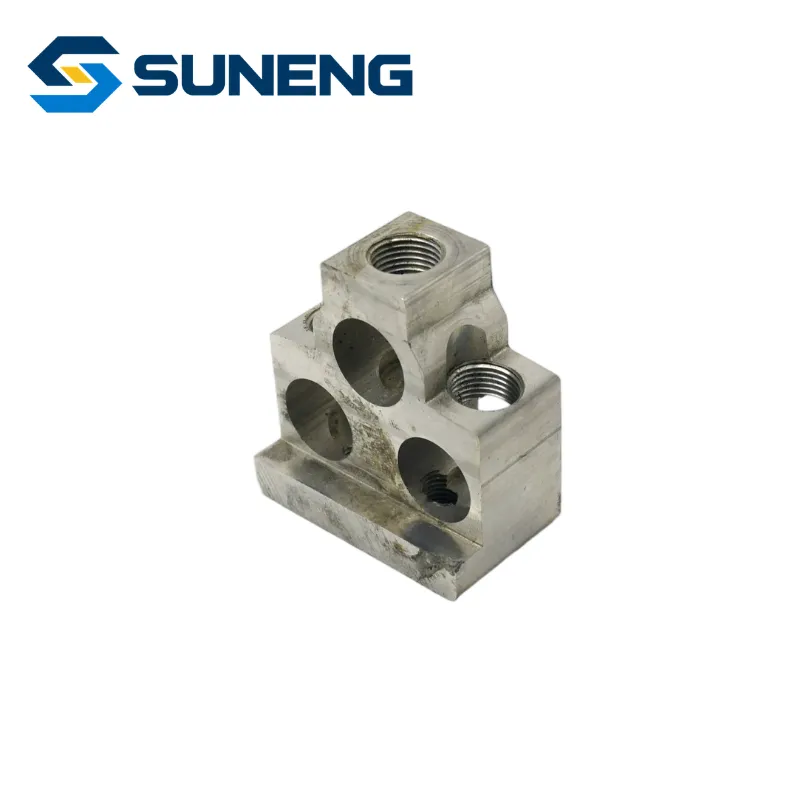
CNC aluminium terminal-block product reference. Process feasibility and acceptance requirements are reviewed for each custom part.
Clarify what “opening a mould” means
For metal components, the proposal may involve casting tooling, forging dies or another forming process, followed by machining. These are not interchangeable processes. Ask the supplier to name the proposed route and identify which features will still need machining, finishing or inspection.
CNC machining is not free of setup costs either. Programming, workholding, stock preparation and inspection preparation can be substantial for a small batch. A fair comparison starts with the same approved functional requirements, not with the assumption that one route has no upfront cost.
Use a total-cost sheet
Cost or commitment
CNC route: request a value
Tooling route: request a value
One-time preparation
Programming, fixtures and setup; identify reusable items.
Tool design, manufacture and trials; identify ownership.
Samples and approval
Prototype quantity, inspection and revision allowance.
Trial parts, tool corrections and approval allowance.
Finished unit price
Material, machining, finishing and agreed inspection.
Forming, secondary machining, finishing and agreed inspection.
Verification
Required dimensional and performance checks; exclusions.
The same acceptance requirements; exclusions.
Changes and repeat orders
Reprogramming or fixture changes, reorder setup and quantity breaks.
Tool modification, storage, maintenance and reorder conditions.
Delivery basis
Packing, freight basis, taxes and lead-time starting point.
The same delivery basis, including tooling and approval milestones.
For a defined order, compare: total order cost = agreed one-time charges + quantity × finished unit price + separately quoted verification and delivery charges. Do not count a charge twice if it is already included in the unit price. Compare the same currency, acceptance scope and delivery basis.
Separate today’s order from hoped-for volume
Request one quotation for the confirmed first batch and a separate repeat-order scenario. Ask what changes at each quantity: setup allocation, material purchase, inspection or unit price. Protolabs’ pricing guidance illustrates that quotation structures differ by manufacturing service and provider; its CNC service, for example, describes no upfront non-recurring engineering charge. Do not assume that arrangement applies to another supplier or treat its published prices as a SUNENG quote.
A tooling investment can look attractive if it is divided by a large forecast quantity. If that forecast is uncertain, keep the uncommitted quantity visible instead of assuming it will be ordered. Also identify who owns the tooling, where it is stored, what maintenance costs apply and what happens if the drawing changes.
Do not buy a cheaper process by changing the requirement silently
List the features that matter to function: mating faces, conductor or bolt interfaces, critical dimensions, material specification, finish and relevant electrical or mechanical performance. Invite design-for-manufacture suggestions, but require every proposed change to be identified and approved.
A sample machined from one material does not automatically validate a production part made by a different process or in a different material condition. A 3D-printed shape can support discussion of appearance and available space; it does not demonstrate conductivity, temperature-rise performance or structural strength. Define separate checks for fit and function.
A practical staged purchase
Feasibility review: provide drawings, parameters or a reference sample, and identify the interfaces that cannot change.
Proposal: request the manufacturing route, assumptions, exclusions, drawing and cost breakdown.
Sample: agree what the sample is intended to prove and how changes will be recorded.
First-article approval: freeze the drawing revision, material, finish and acceptance plan.
Production and reorder: specify quantity, traceability, inspection records and the conditions for repeating the order.
Send a requirement, not only a target price
We need an initial batch of 50 parts for the attached interface. Please compare feasible production routes against the same material and acceptance requirements. Separate setup/tooling, samples, finished-part price and verification costs. State what changes if the drawing is revised and quote repeat quantities separately.
SUNENG supports OEM/ODM and small-batch custom development across electrical components, rather than limiting enquiries to a fixed list of standard models. If your drawing is incomplete, start with the mating dimensions, performance requirements, environment and quantities. Our custom-development guide explains how to organise those inputs.
Two quotations can show the same product name and still describe different supplies. One may include the mating hardware, inspection records and export packing; another may price only the main component. Use this checklist to obtain a comparable quotation for an overhead-line package, electrical connections or distribution equipment.
Start with the decision you need to make
Tell the supplier whether you need a budget estimate, a technically confirmed replacement, or a production quotation for a custom component. State the destination, quantity, required delivery date and whether that date means dispatch from the factory or arrival at the project. A preliminary estimate should identify open assumptions before it becomes a purchase specification.
Put each product on its own line
Give every BOM item a reference number and specify the unit: piece, pair, complete assembly, kit or set. For an insulator string or fitting assembly, list what constitutes one set. For a termination kit, identify the number of cores and whether the lugs, earthing components and sealing accessories are included. Request the supplier’s proposed model and drawing revision against the same reference.
Electrical connectors and cable accessories
Conductor material, nominal cross-section, construction and actual diameter; attach the cable datasheet where available.
Equipment-side dimensions: bolt size, hole spacing, palm width, angle and available installation space.
For cable terminations: rated voltage, core count, insulation diameter, screen construction and indoor or outdoor use.
Installation tooling already available and any required sealing or surface finish.
Overhead-line fittings and insulators
Conductor designation and diameter, assembly drawing, attachment dimensions and intended suspension or tension function.
Specified mechanical and electrical requirements, applicable standard and edition, and any utility-specific drawing.
Site conditions that affect the review, including altitude, temperature, pollution, corrosion exposure and ice or wind requirements from the project designer.
Transformers and switchgear components
Transformer capacity, voltage ratio, frequency, vector group, tapping requirements and installation conditions.
For switching equipment: required switching function, rated voltage and current, fault-duty requirements, mechanism, control supply and interlocking interfaces.
Connection arrangement, dimensional restrictions, accessories and the boundary between the supplier’s equipment and the customer’s installation.
No complete drawing? Separate what is fixed from what is open
For a non-standard part, send the dimensions that cannot change, the function it must perform and the quantity required for samples and production. An annotated photograph or reference sample can start the discussion. It does not establish hidden dimensions, material properties or electrical ratings.
Ask for a proposed drawing and a list of assumptions before approving manufacture. Quote prototype cost, tooling cost, unit price and any inspection or testing separately. Confirm who approves the sample, which drawing revision production will follow, and how later changes affect price and timing. See our OEM/ODM development capabilities for the route from parameters to a production part.
Make the quotations comparable before comparing prices
Use the following questions when reviewing each offer:
Technical match: Is the proposed model confirmed, or is it an alternative awaiting approval? Are deviations listed explicitly?
Scope: Are matching nuts, bolts, washers, covers, connectors and other required accessories included?
Evidence: Which drawings, material records and test documents are included, and which require a separate arrangement?
Commercial basis: Are currency, delivery term, named place, packing, quotation validity and exclusions stated?
Schedule: Does lead time start at order confirmation, drawing approval, sample approval or another agreed milestone?
A short enquiry you can reuse
Please quote against the attached BOM references and identify the proposed model and drawing revision for each line. List any technical deviations, excluded accessories and information needed for confirmation. Separate sample/tooling costs from production prices, and state the documents, packing, delivery basis and approval milestones included.
SUNENG supplies power T&D equipment and custom electrical components through one enquiry route. Send your confirmed requirements and unresolved questions together; we can review standard options and the parts that need development. For mixed packages, use our mixed-BOM supply guide. For document checks, read how to review technical evidence.
We use essential cookies for site security and optional analytics cookies to understand which pages are useful. Analytics stays off unless you allow it.
Privacy controls
Cookie preferences
Choose whether SUNENG may use anonymous analytics to improve this website. You can change this choice at any time.
Essential cookies
Required for security, forms and core website functions.
Always active
Advertising and personalization cookies are not enabled by this website.