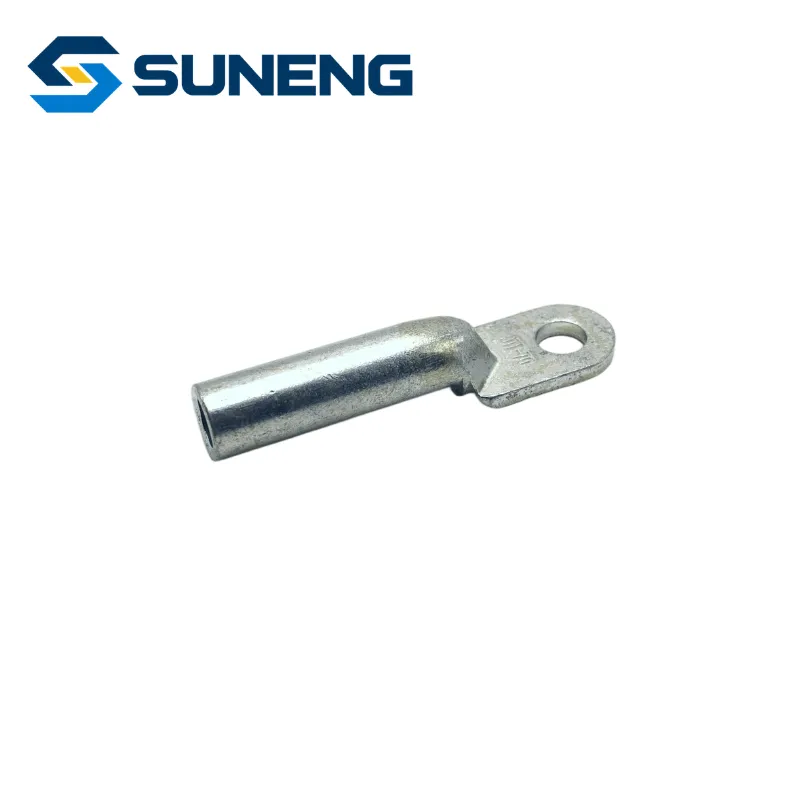
“240 mm² cable” and “240 mm² lug” are not a complete compatibility specification. The cable’s conductor construction, the connector’s accepted conductor range, the equipment interface and the approved installation system all need to agree before an order is released.
The number in this example is an enquiry scenario, not a claim that a particular 240 mm² product is defective. The same review applies to other conductor sizes. This article is a procurement checklist; installation must follow the selected connector’s instructions and qualified site procedures.
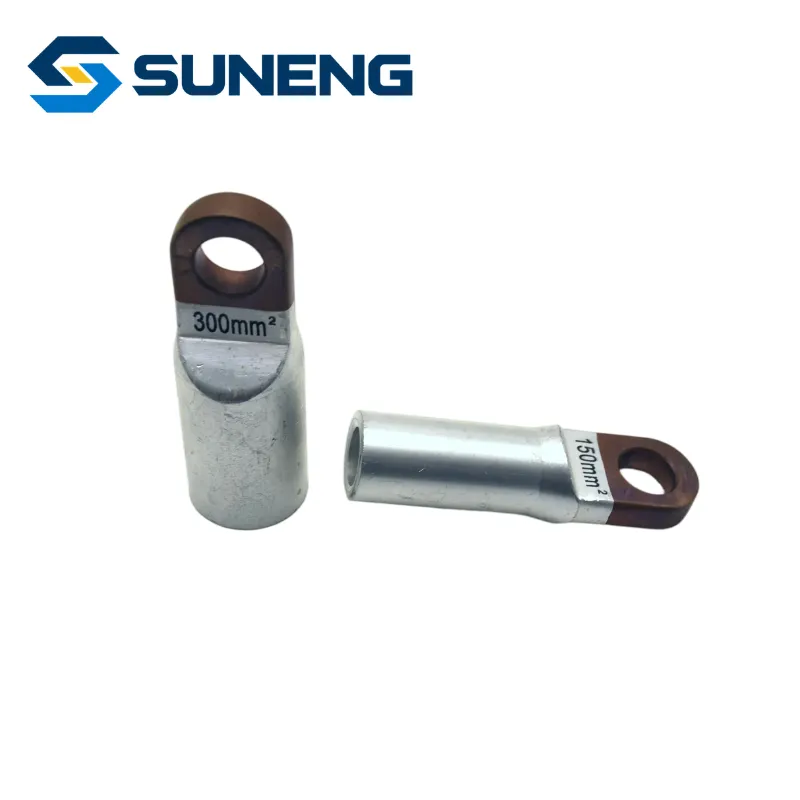
Start with the conductor, not the outside of the cable
Request the cable manufacturer’s datasheet and construction designation. Keep overall cable diameter, insulation diameter and conductor diameter in separate fields: they describe different interfaces. For a compression barrel, the relevant conductor details cannot be replaced by a measurement over the insulation.
Record whether the conductor is copper or aluminium, its nominal cross-section, construction or class, shape and whether it is compacted. Ask the connector supplier to confirm suitability for that identified conductor. Do not assume a connector approved for one construction accepts every conductor carrying the same cross-section label.
A fit check has four parts
| Check | Buyer provides | Supplier confirms |
|---|---|---|
| Conductor | Material, construction designation, nominal size, shape and available dimensional data. | Accepted conductor type and size range for the exact connector. |
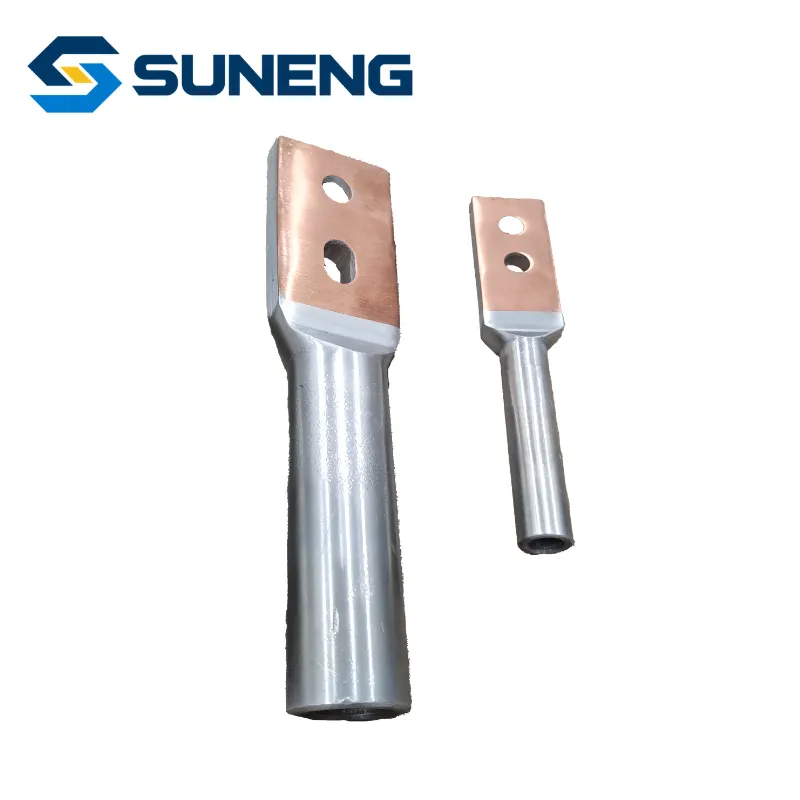
| Barrel | Conductor dimensions and any restrictions on available stripping or insertion space. | Barrel drawing, insertion requirements and connector-specific preparation instructions. |
| Equipment | Stud or bolt arrangement, hole centres, mating material, palm envelope and cable approach. | Hole pattern, palm width and thickness, angle, finish and installation clearance. |
| Installation | Available tool and die identification and the proposed site method. | Approved tool/die system, compression sequence and inspection requirements. |
If the conductor will not enter the barrel
Stop and compare the cable designation with the connector drawing and accepted conductor list. Check whether the delivered connector is the ordered variant. Give the supplier the observed dimensions and photographs of an uninstalled sample; do not improvise a conversion by removing strands or machining the barrel.
A nominal-area calculation does not replace a connector manufacturer’s dimensional and application confirmation. If no standard connector is suitable, define the required conductor range, equipment interface and verification plan before ordering a custom barrel or palm.
If the conductor enters, is the connection approved?
Not yet. Physical insertion is only one check. The agreed connector and compression system still need to match, and the prepared conductor must meet the selected product’s instructions. BURNDY’s training, for example, treats connector selection, conductor preparation, tooling, crimp sequence and final inspection as connected steps. Its die codes must not be transferred to another manufacturer’s connector.
A loose fit before crimping cannot be judged from a photograph alone. Send the measured data for review rather than filling a gap with improvised packing. Conversely, successful insertion says nothing about whether the terminal palm will fit the equipment.
Check the palm while the drawing is still editable
Ask the equipment supplier for an interface drawing. Identify bolt-hole diameter and centres, available contact area, neighbouring connections and the cable approach. Make sure the drawing’s units are clear. A catalogue designation containing a diameter must not be assumed to describe the barrel rather than the mounting hole.
For a custom angle, offset or hole arrangement, request a dimensioned proposal and agree the acceptance checks. A sample can support assembly review; it does not by itself demonstrate electrical or mechanical performance.
Compression or mechanical connector?
Do not treat a mechanical connector as a universal escape from a fit problem. Ask for its accepted conductor constructions and range, applicable preparation and fastening method, installation envelope and evidence. Compare a complete proposed connection system with another complete system, not simply “needs a hydraulic tool” against “does not”.
A clearer enquiry to send
Please confirm a terminal for the attached cable datasheet and equipment interface. The conductor material, construction and dimensions are identified separately from the cable’s overall diameter. Confirm your exact model, approved installation system and any deviations. If a standard palm or barrel is unsuitable, quote a dimensioned custom proposal with sample and verification requirements.
SUNENG supplies standard terminals and reviews custom connection requirements, including interface dimensions and available installation methods. Send your cable datasheet and equipment drawing. If a connection is already heating, use the heating investigation checklist rather than assuming dimensional fit is the only cause.