Dynamic line rating can reveal unused thermal capacity in an overhead line under favorable conditions. It does not physically upgrade a connector, increase a structure’s strength or change a switchgear nameplate rating.
For a utility considering more flexible operation, that distinction is commercially important. Monitoring may improve how existing capacity is used, but a project can still be limited by an unreviewed connection, terminal, clearance or operating constraint elsewhere in the circuit.
What the technology changes—and what it does not
Dynamic line rating uses changing operating conditions to assess an overhead line’s current-carrying capability. Weather and conductor behavior matter because the line’s thermal state is not fixed throughout the year. Great River Energy’s published deployment announcement provides a real-world example of this approach.[1]
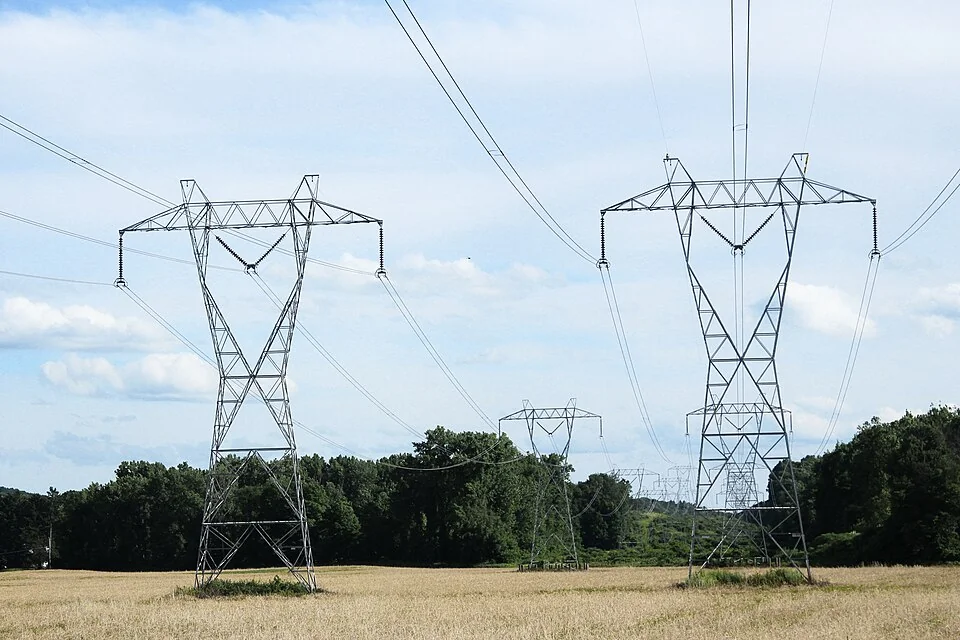
There is no universal percentage uplift. The available operating rating varies with the particular line, weather, monitoring approach, limits and operational rules. A project should not turn a favorable demonstration into a year-round commercial promise. The terminology should match the actual implementation, not the most attractive label.
The subject is not just a theoretical future upgrade. On March 20, 2024, Great River Energy published an announcement of a project to install 52 Heimdall Power sensors.[1] That is a dated deployment announcement, not proof of present completion or a capacity-increase promise transferable to another utility’s hardware.
The engineering opportunity is to make a more informed operating decision. It is not to make the chain of equipment stronger by calculating a larger number.
Draw the whole constraint chain
Start at one terminal and follow the current path to the other end. Identify the spans, joints, jumpers, conductor interfaces, terminal equipment and associated operational constraints. Assign an owner and evidence record to each limit.
Not every component uses the same type of limit. A span can be constrained by clearance at a particular conductor temperature. A connection has its own qualification and condition history. Terminal equipment may have a continuous-current rating. Protection settings and system stability can impose further restrictions that are not conductor-temperature limits at all.
An illustrative screening case makes the logic clear. Suppose a study indicates 1,200 A is thermally feasible for a monitored span at a particular time, but verified terminal equipment is limited to 1,000 A in the applicable conditions. The monitored span’s result is not permission to operate the entire circuit at 1,200 A. This is a simplified example, not an operating calculation; the network operator must establish the actual controlling constraints.
Treat existing fittings as evidence-bearing assets
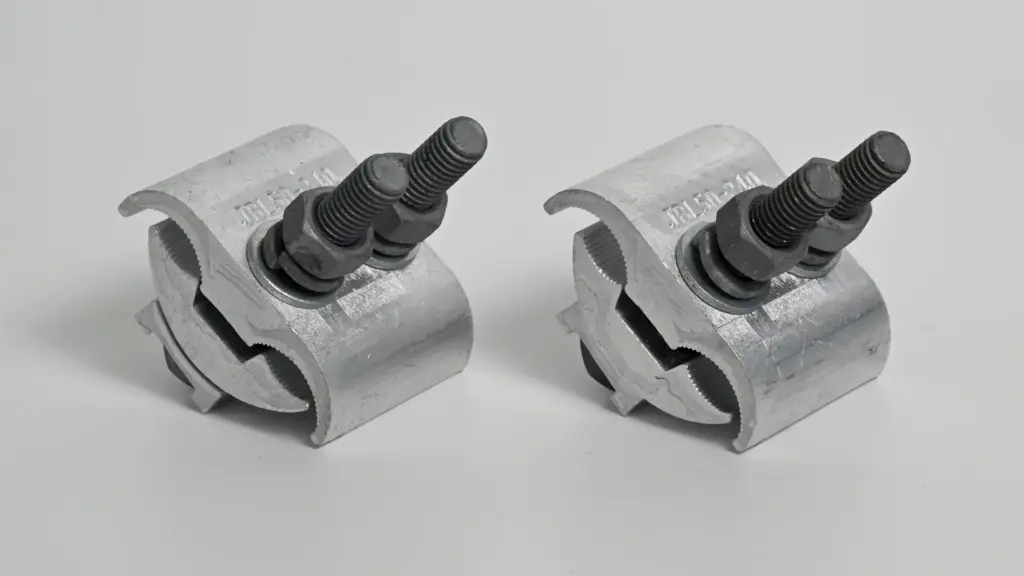
The first question about a joint is identity, not whether it looks large. Can its model, conductor compatibility, installation method and qualification basis be traced? Has the conductor or connection geometry changed since installation? Is the available report for the exact interface or merely a superficially similar component?
Our overhead-line interface guide explains why conductor fit and connection dimensions matter. A dynamic-rating project adds another reason to preserve those records: operating closer to a reviewed limit makes uncertainty in the hardware chain more consequential.
For older assets with incomplete records, do not silently convert “unknown” into “adequate.” The appropriate response may be further assessment, targeted inspection, a conservative interim limit or replacement. Which response is justified depends on the asset and network requirements.
Ask what happens when the data becomes unavailable
A rating is useful only if operations can act on it responsibly. Define the behavior when a sensor stops reporting, a weather input becomes stale, communications fail or observed conditions move outside the validated model range. The fallback should be agreed before it is needed.
The important design questions are not limited to which sensor is most accurate:
| Boundary | Question the operating plan must answer |
|---|---|
| Representativeness | Do monitored locations capture the limiting spans and conditions? |
| Data age | When is an input too old to support the dynamic value? |
| Constraint ownership | Who maintains terminal, connection and clearance limits? |
| Transfer into operations | How are ratings communicated, checked and enforced? |
| Abnormal condition | What approved limit applies when information is lost or disputed? |
| Change control | Who revalidates the assessment after conductor, fitting or route changes? |
A sensor catalogue cannot answer all of these. They belong to the design and operating system around the sensor.
Scope a practical hardware review without promising an uprating
A useful first work package is an asset-interface register: conductor identity, connection type, installation evidence, available inspection record and the applicable equipment limits. Highlight missing evidence rather than hiding it in a general “suitable for high current” statement.
If replacement parts are needed, carry the verified conductor, connection dimensions and environmental requirements into the specification. A new fitting should be evaluated for the actual interface and required performance, not chosen because its nominal voltage resembles the line’s name.
SUNENG supports discussions about electrical fittings and project components. We do not present component supply as a grid-operating study or as proof that a line can be uprated. The value is in making the hardware scope and supporting evidence clearer for the utility’s responsible engineering team.
The practical conclusion: dynamic line rating and hardware assurance are complementary. Better information can unlock operating flexibility only within a constraint chain that has actually been reviewed.
Source notes
[1] Great River Energy Economic Development, Press Release: Heimdall Power launches largest Dynamic Line Rating project in the U.S. with Great River Energy, March 20, 2024. The count and date refer to that announcement, not to an independently verified current project status. The constraint-chain example and review questions are original engineering analysis, not a utility-approved uprating method or a claim of a guaranteed capacity increase.