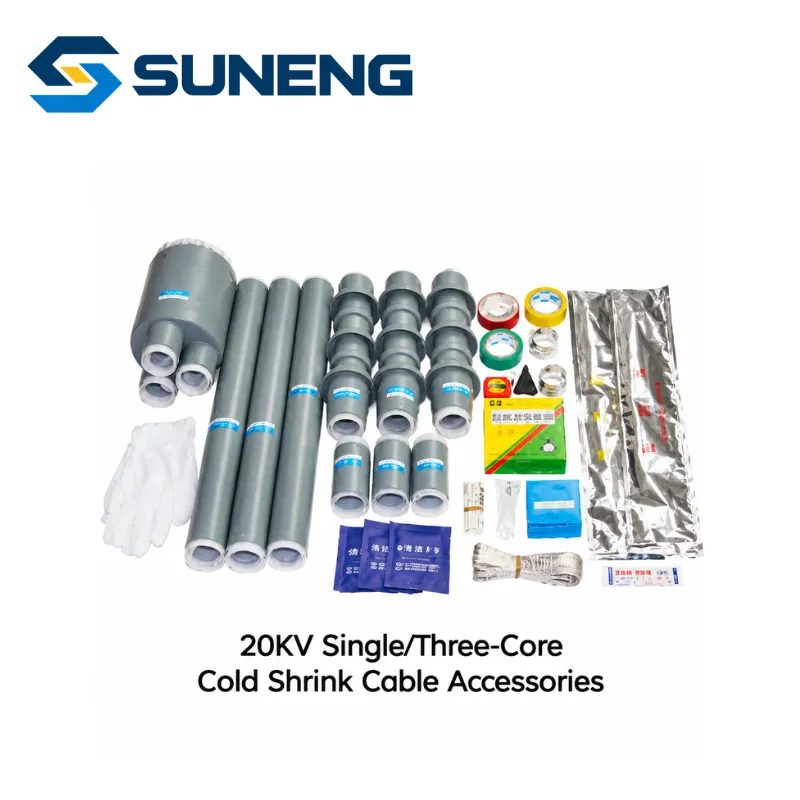
An enquiry that says “10 kV, three-core, 240 mm²” gives a supplier a useful starting point. It still leaves several questions open: the cable insulation diameter, screen and armour construction, installation location, equipment interface and which components the kit must include. Resolving these before ordering reduces the risk of discovering a mismatch during a shutdown.
Start by identifying the job: a cable termination at equipment, a straight-through joint, or environmental sealing around an existing connection. Those functions require different components. A cold-shrink sealing sleeve alone should not be specified as a complete medium-voltage termination.
Read the cable construction before choosing the kit
Ask for the cable manufacturer’s datasheet, the marking on the cable and a construction drawing. Record its voltage designation exactly as stated, including U0/U (Um) where used. Confirm the system requirements separately with the project engineer. A shortened market description such as “10 kV cable” may omit information needed to select the accessory.
Keep conductor cross-section, insulation diameter and overall cable diameter in separate fields. The conductor fits the terminal or connector; the accessory body fits the relevant prepared cable layers; outer sealing components fit another part of the cable. Substituting one diameter for another can lead to a kit that appears correct in a catalogue but is unsuitable for the actual cable.
| Information to send | Details to identify | What the supplier should confirm |
|---|---|---|
| Cable identity | Manufacturer, designation, voltage rating, core count and insulation material. | Applicable kit and cable constructions covered. |
| Cable dimensions | Conductor construction, insulation diameter, oversheath diameter and drawing tolerances. | Dimensional ranges for the accessory and sealing parts. |
| Screen and armour | Metallic screen type, armour, sheath and required bonding arrangement. | Earthing components and connection method included in the proposal. |
| Location and interface | Indoor/outdoor use, exposure, clearances, terminal palm or equipment bushing drawing. | Accessory configuration, terminal interface and installation space. |
| Site method | Available working space, tools, installer experience and restrictions on heating. | Installation procedure, equipment and preparation requirements. |
Compare cold-shrink and heat-shrink against the site
Cold-shrink components are typically supplied expanded on a removable support. Removing that support allows the component to recover onto the cable. This avoids a heating step for that component, but cable preparation, dimensional compatibility and installation sequence still determine the result. Confirm storage conditions and shelf life for the specific kit, especially when delivery and installation are months apart.
Heat-shrink components recover when heated according to their installation instructions. Check whether the site permits the specified heating equipment, how the installer will access the component and whether other nearby materials affect the work method. A lower kit price may be offset by site equipment, permits or additional labour; obtain those costs from the contractor before comparing the complete installed scope.
For either route, ask for the instructions for the actual kit. Agree who supplies conductor connectors, crimping tools, preparation tools and any consumables. A familiarity with one manufacturer’s assembly does not establish the preparation dimensions of another.
Confirm exactly what arrives in the box
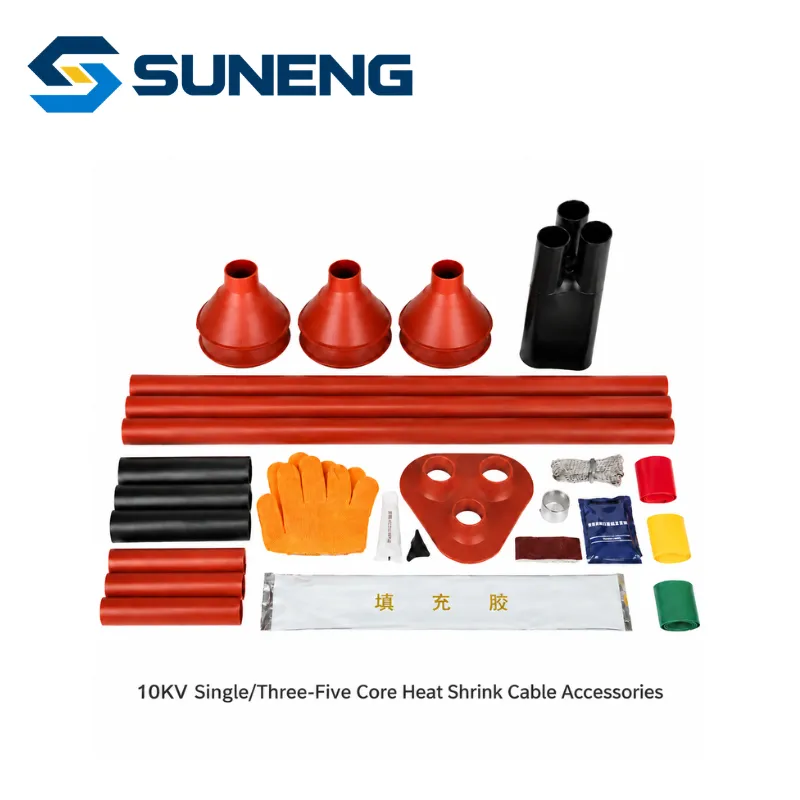
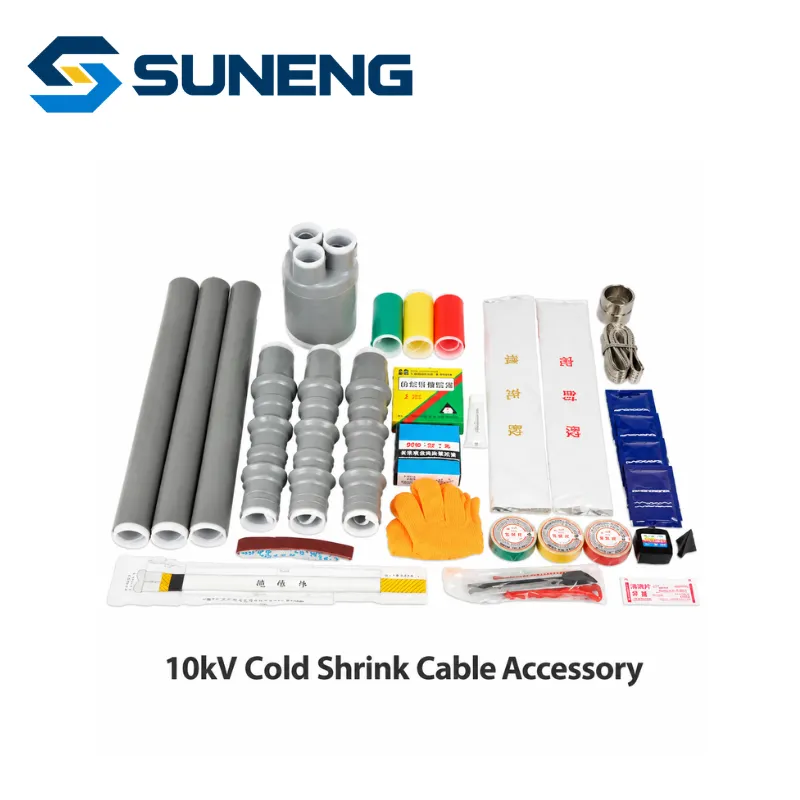
Request a component list tied to the kit code. Have the supplier mark the following as included, separately quoted, or provided by the installer:
- Termination or joint bodies, stress-control components and sealing parts.
- Breakout and phase-identification components where applicable.
- Terminals or joint connectors, with conductor range and equipment interface.
- Screen/armour continuity and earthing components required by the approved arrangement.
- Installation instructions, special tools, consumables and any specified test documents.
Resolve terminal selection at the same time. A correctly selected accessory cannot compensate for a lug that does not accept the cable or fit the equipment. Use the cable-to-lug compatibility checklist to confirm those interfaces.
Before releasing the order
Compare the offered kit code with the cable datasheet, installation drawing and component list. Record any deviation and obtain project acceptance before purchasing. For a repeat order, check whether the cable manufacturer, insulation diameter or equipment connection has changed since the previous delivery.
Relevant SUNENG products
- 10kV Cold Shrinkable Cable Accessories for Three-Core Power Cables
- 10kV Heat Shrink Cable Termination Kit and Medium Voltage Cable Joint Kit
- 20kV Cold Shrinkable Cable Accessories for Medium-Voltage Power Cables
SUNENG can review cable accessories, terminals and related connection components together. Send your cable datasheet, equipment interface and required quantities; include the planned installation date and site restrictions so the quotation covers the work you need to complete.