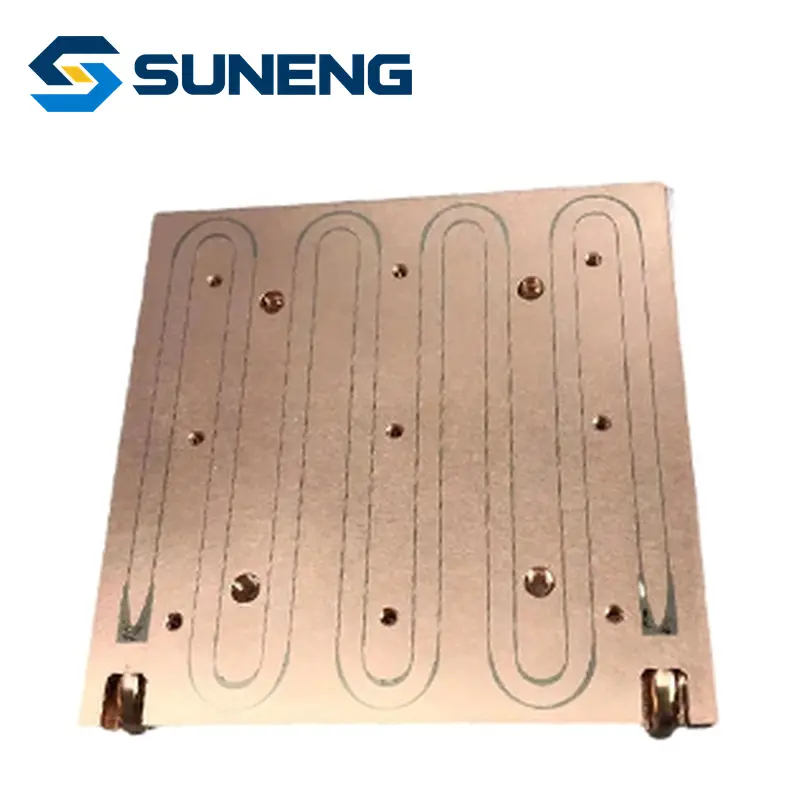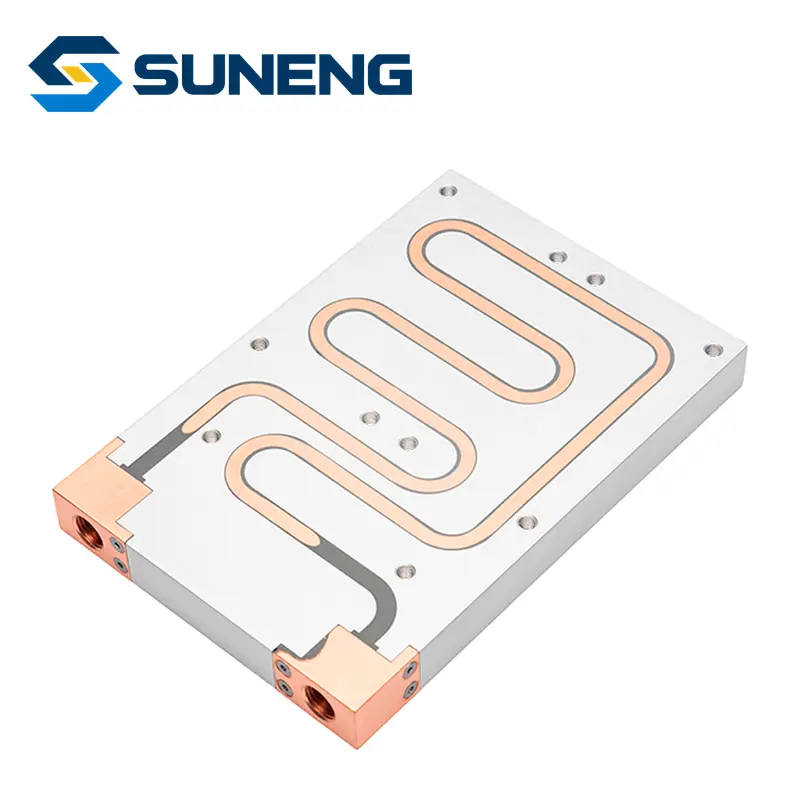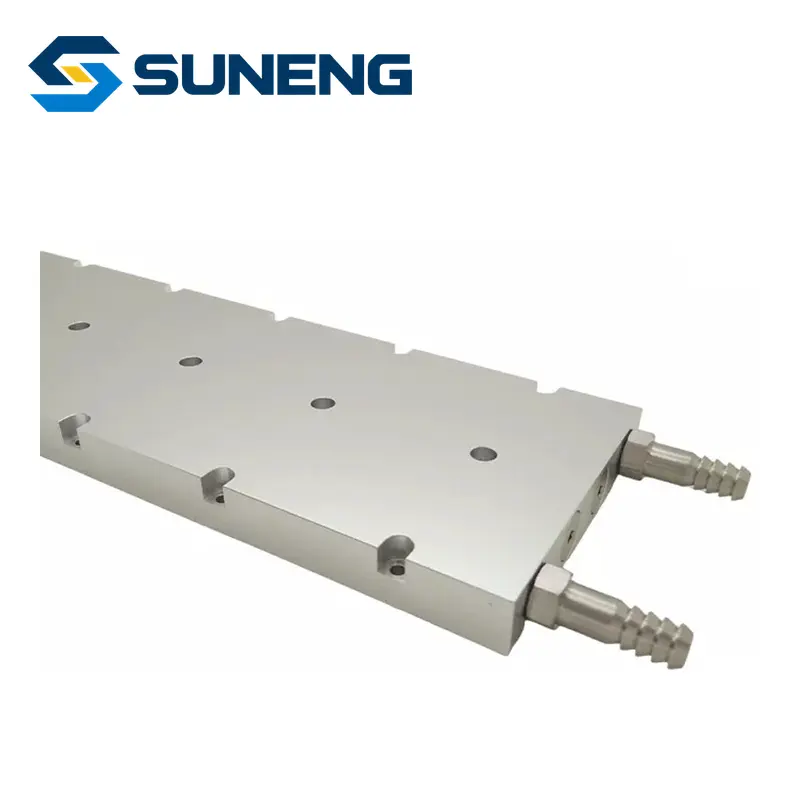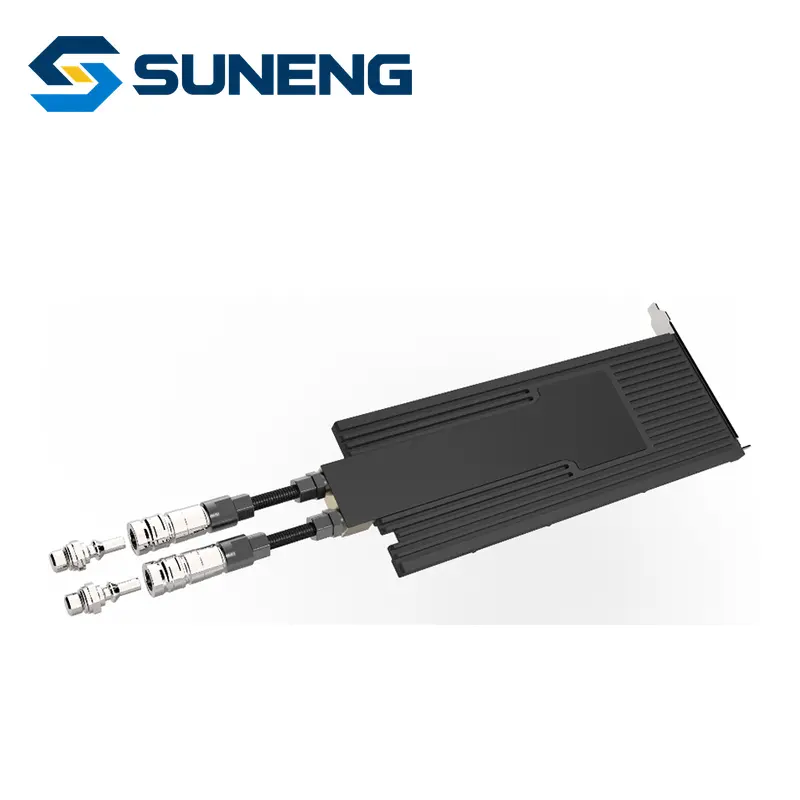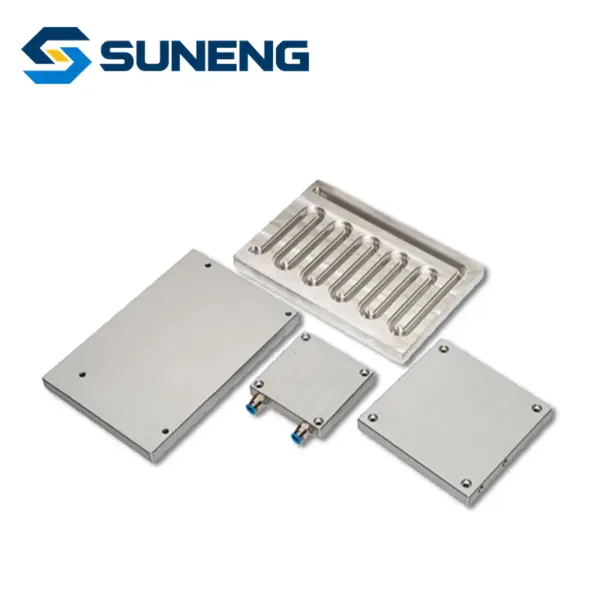
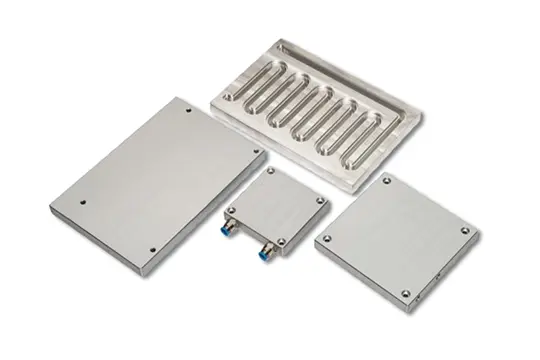
Friction Stir Welded Liquid Cold Plate
- Aluminium construction
- Friction stir welded joints
- Custom mounting and fluid connections
Product Overview
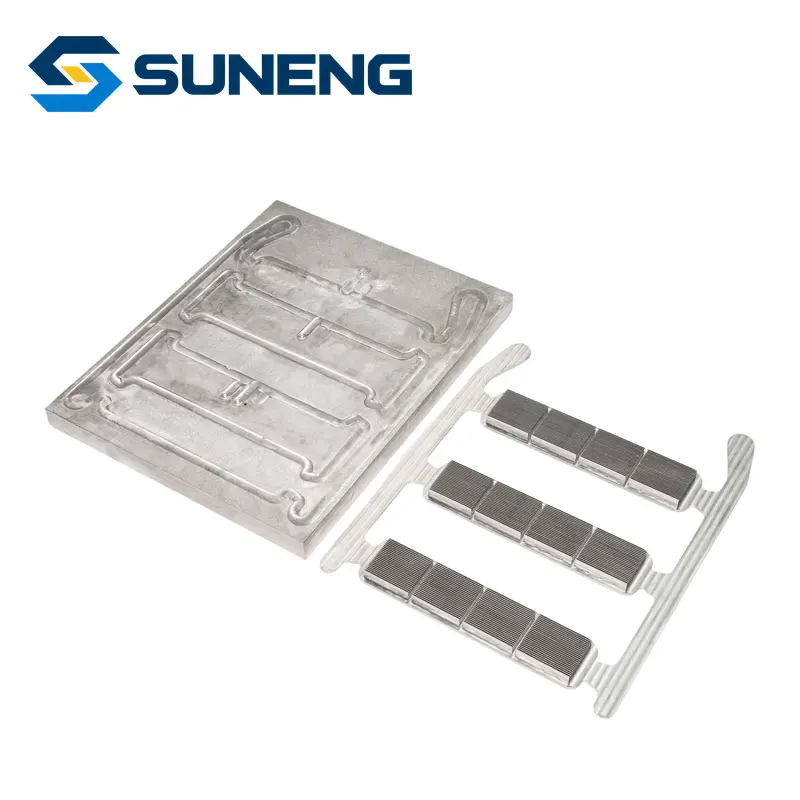
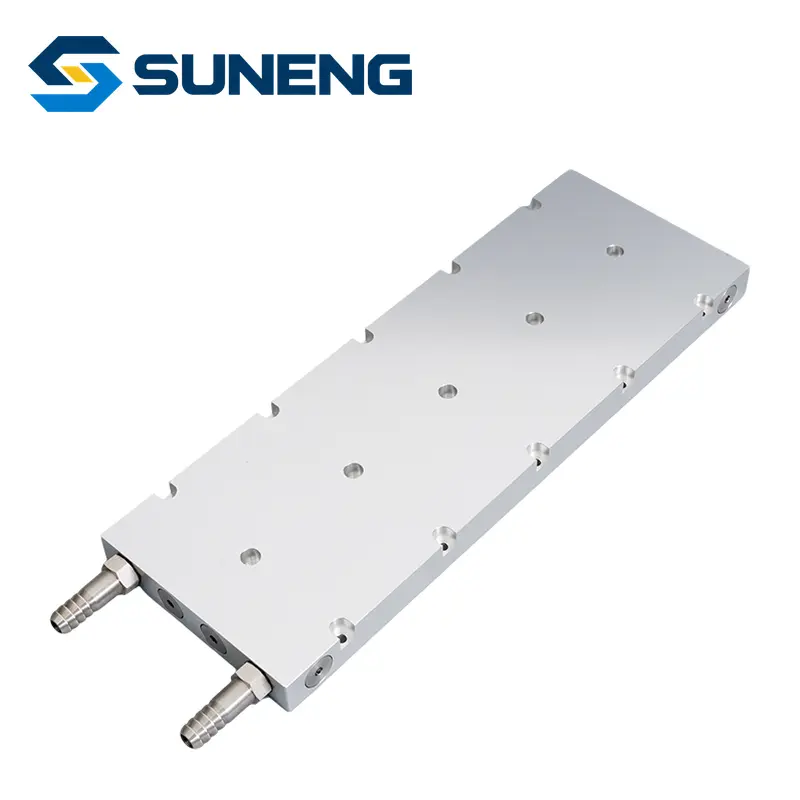
Custom aluminium liquid cold plates for battery systems and power electronics, with machined coolant passages enclosed by a friction stir welded cover. Configure the mounting envelope, fluid connections and cooling duty for your equipment.
Share the model, quantity, drawing, destination and project requirement for a focused response.
Construction & Cooling Principle
The cold plate provides the contact surface between a heat-producing assembly and a pumped liquid circuit. A suitable thermal interface material helps transfer heat into the plate; coolant carries it to the system heat exchanger.
The plate is one part of that circuit. Its performance must be evaluated alongside the pump, coolant, hoses, manifold and heat exchanger. Contact area, internal geometry and flow resistance influence the operating point.
Typical Specifications
Indicative design ranges; final ratings depend on the specified geometry, coolant and test conditions.
| Property | Typical value / range |
|---|---|
| Base alloy | Aluminium 6061-T6 |
| Material conductivity | 167 W/(m·K) |
| Coolant flow | 1–10 L/min |
| Operating pressure | 2–10 bar |
| Heat dissipation | 500–5,000+ W |
| Thermal resistance | 0.02–0.15 K/W |
How Friction Stir Welding Works
FSW joins metal while it remains solid. A rotating tool presses into the joint and travels along it. Friction and deformation soften the surrounding material, which is stirred together and consolidated behind the tool.
This differs from a fusion weld, where the parent metal melts. The tool shoulder contains the softened material while the probe acts within the joint. Alloy, tool geometry, clamping and process settings influence the finished weld, so the production procedure and inspection plan form part of the specification.
Channel & Interface Options
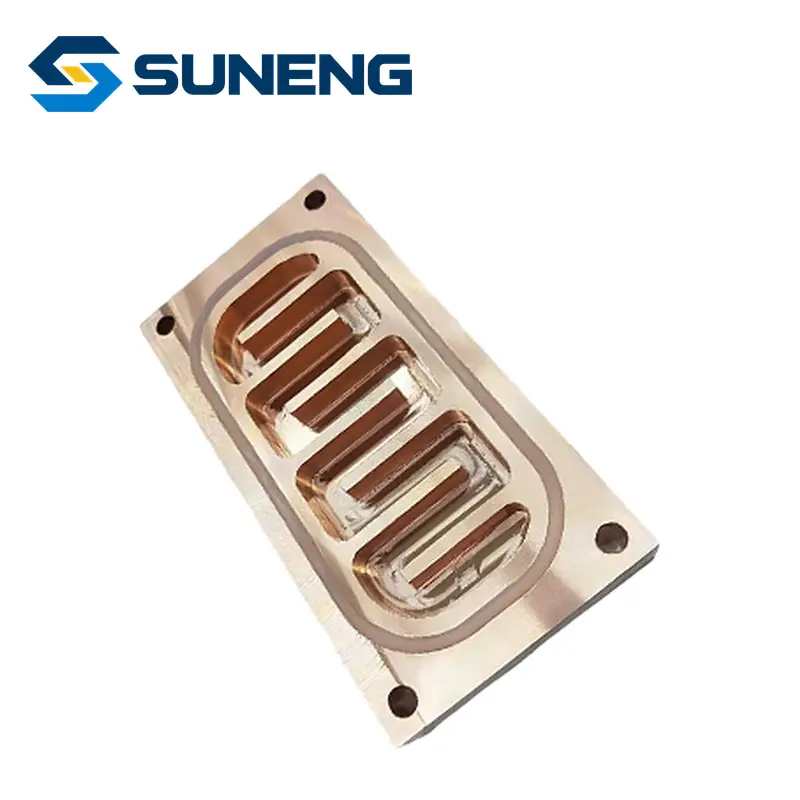
Available layouts include serpentine, parallel and multi-pass channels.
Start with the positions of the heat sources and the available inlet pressure. Channel length, cross-section and distribution affect both heat transfer and pressure drop. The preferred layout is the one that meets the thermal target within the available pumping capacity.
| Interface | Information to provide |
|---|---|
| Equipment contact | Heat-source footprint and mounting drawing |
| Fluid connections | Port position, thread or fitting interface |
| Installation envelope | Overall dimensions, clearances and fixing points |
| Coolant circuit | Fluid type, inlet temperature, available flow and pressure budget |
Manufacturing & Inspection
- Inspect plate material.
- Machine channels and interfaces.
- Join the cover by FSW.
- Check pressure tightness.
- Validate thermal and hydraulic performance.
The order specification should identify the accepted drawing revision, inspection items and records required for release.
Applications
- EV battery assemblies
- IGBT modules and inverters
- Energy-storage equipment
- Industrial lasers and power electronics
Cold Plate Technologies
Channel machining and plate joining are different manufacturing steps. A machined cold plate can also use an FSW joint.
| Construction | Fluid-path approach |
|---|---|
| FSW-sealed plate | A welded cover encloses the machined passage |
| Vacuum-brazed plate | Brazed construction can incorporate internal fins |
| Tube-in-plate | Tubing is bonded into a supporting plate |
| Micro-channel plate | Fine internal passages increase fluid-contact area |
Custom Development with SUNENG
Send your drawing or a marked-up installation sketch, target quantity and required delivery date. Include the heat-source positions, mounting faces, fluid connections and any dimensions that cannot change.
For a thermal review, provide the heat load, maximum permitted component temperature, coolant composition, inlet temperature and available flow. We can then define the product configuration, sample requirements and acceptance criteria for quotation.
Use the enquiry form below to describe your project. Attach drawings through the full enquiry page.
Frequently Asked Questions
Does FSW melt the plate material?
No. The rotating tool produces a solid-state joint through local heating and mechanical stirring.
Does the cold plate replace the rest of the cooling system?
No. A working circuit still needs circulation and a means of rejecting the absorbed heat, selected for the installation.
Can a flow-rate figure alone establish cooling performance?
No. Review it with inlet temperature, heat-source contact, coolant properties and the pressure drop of the complete circuit.
What should I send for a quotation?
A drawing or installation sketch, thermal requirements, connection details, order quantity and destination provide a practical starting point.
Inquiry Now
Send the model, drawing, BOM or project specification. Our team will respond around the actual selection points.
Open Full Enquiry Page