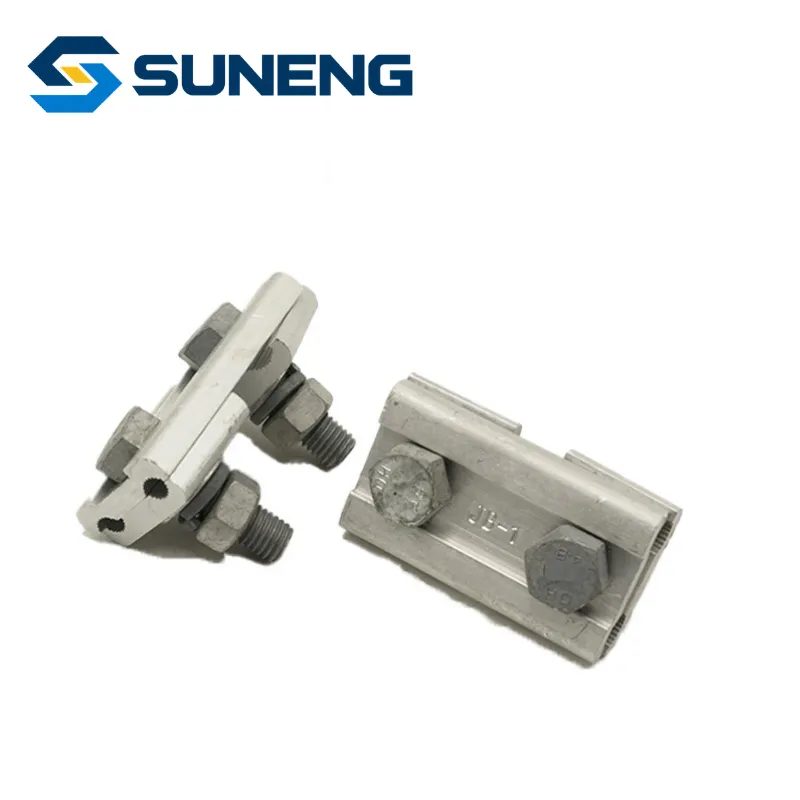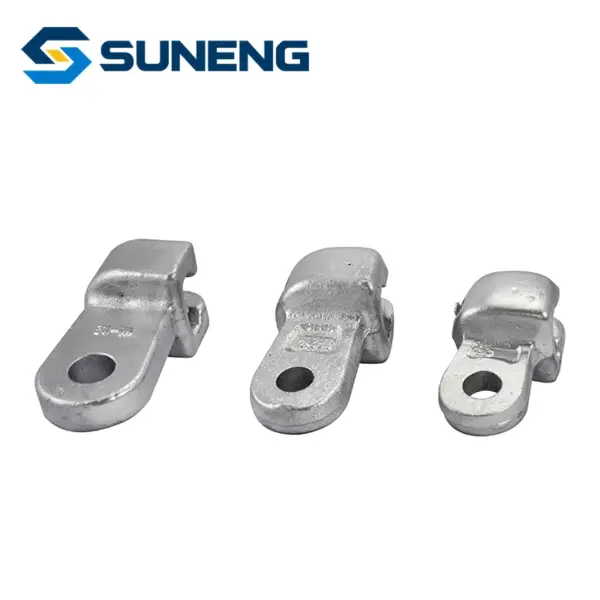
W Series Socket Clevis Links
Product Overview
Bowl head hanging plate is a type of connecting hardware in power systems, mainly used to connect suspension clamps and insulator strings, and to work together with other accessories to connect wires and insulation.
Share the model, quantity, drawing, destination and project requirement for a focused response.
Product Overview
As a leading manufacturer and supplier of premium power line hardware, we provide high-performance socket-clevis eyes designed for secure electrical grid connections. This specialized hardware features a precision-engineered cap socket on one end and a durable plate-shaped connection on the other, ensuring seamless integration into complex overhead power systems.
-
High-strength malleable iron or cast steel construction
-
Hot-dip galvanized surface for superior weather resistance
-
Rated failure load ranging from 70kN to 320kN
-
Precision-engineered for overhead power lines and substations
Product Description
The Bowl Head Hanging Board, universally recognized in the industry as socket-clevis eyes, serves as the critical structural backbone for modern high-voltage power transmission networks. Crafted with meticulous attention to metallurgical integrity, the core body is forged from high-grade malleable iron or cast steel. When handling these components, the substantial weight and the smooth, cold touch of the hot-dip galvanized surface immediately convey a sense of industrial-grade reliability. This robust metallic finish is not merely an aesthetic choice; it acts as an impenetrable shield against harsh environmental elements, preventing structural degradation over decades of continuous exposure to rain, ice, and fluctuating seasonal temperatures.
Product Specifications
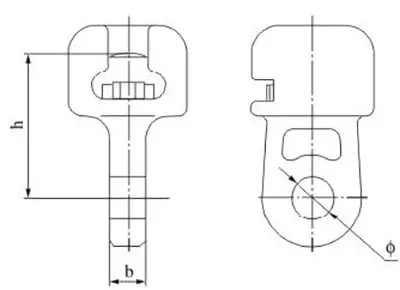
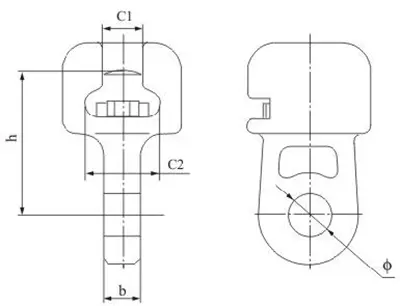
Our socket-clevis eyes are manufactured to exact dimensional tolerances to ensure perfect compatibility with diverse infrastructure requirements. The tables below detail the precise technical parameters, including linked markers, comprehensive dimensions, rated failure loads, and unit weights for both Type W and Type W/W1 configurations. These standardized metrics assist engineering teams in selecting the optimal hardware for specific voltage levels and span requirements.
Socket-clevis eyes (type W)
|
Model |
Linked marker |
Dimensions(mm) |
Rated failure load(kN) |
Weight(kg) |
||
|---|---|---|---|---|---|---|
|
φ |
b |
h |
||||
|
W-0770 |
16 |
18 |
16 |
70 |
70 |
0.8 |
|
W-07115 |
16 |
18 |
16 |
115 |
70 |
1.0 |
|
W-1085 |
16 |
20 |
16 |
85 |
100 |
1.1 |
|
W-1290 |
16 |
24 |
16 |
90 |
120 |
1.3 |
|
W-1695 |
20 |
26 |
18 |
95 |
160 |
1.9 |
|
W-32110 |
24 |
33 |
28 |
110 |
320 |
4.2 |
Socket-clevis eyes (type W, W1)
|
Model |
Dimensions(mm) |
Rated failure load(kN) |
Weight(kg) |
||||
|---|---|---|---|---|---|---|---|
|
φ |
b |
C1 |
C2 |
h |
|||
|
W-7A |
20 |
16 |
19.2 |
34.5 |
70 |
70 |
0.80 |
|
W-7B |
20 |
16 |
19.2 |
34.5 |
115 |
70 |
0.92 |
|
W-12 |
24 |
20 |
23.0 |
42.5 |
90 |
120 |
1.40 |
|
W-30 |
39 |
32 |
27.5 |
51.0 |
110 |
300 |
3.50 |
|
W-0732 |
20 |
32 |
19.2 |
34.5 |
70 |
70 |
1.10 |
|
W1-7G |
20 |
25 |
19.2 |
34.5 |
70 |
70 |
1.10 |
|
W1-10 |
20 |
18 |
19.2 |
34.5 |
85 |
100 |
0.90 |
|
W1-12 |
24 |
20 |
19.2 |
34.5 |
90 |
120 |
1.30 |
|
W-12A |
20 |
38 |
19.2 |
34.5 |
115 |
120 |
1.85 |
Key Features & Highlights
Our hanging boards are meticulously crafted to deliver uncompromising performance in the most demanding electrical grid environments. By integrating advanced metallurgical processes with practical engineering designs, these fittings offer a multitude of operational advantages that streamline installation and maximize grid uptime.
-
Premium Material Composition: Constructed from malleable iron or cast steel, ensuring the core body possesses exceptional tensile strength, rigidity, and impact resistance under heavy dynamic loads.
-
Advanced Anti-Rust Treatment: Every iron and steel component undergoes a rigorous hot-dip galvanizing process, creating a thick, uniform zinc coating that visually presents a matte, industrial silver finish while offering unparalleled corrosion resistance.
-
High-Grade Securing Pins: Equipped with spring pins made of bronze or stainless steel, alongside stainless steel cotter pins, preventing localized rusting and ensuring joint articulation remains smooth over time.
-
Optimized Load Distribution: The engineered ball and socket coordination strictly prohibits point contact, effectively dispersing mechanical stress and preventing micro-fractures under heavy line tension.
Core Material & Anti-Corrosion Craftsmanship
When procuring outdoor power hardware, long-term weather resistance is a non-negotiable requirement. We understand that exposure to harsh environmental conditions can rapidly degrade inferior metals, leading to costly replacements. To combat this, our fittings are forged from high-strength malleable iron or cast steel, providing a solid, unyielding foundation capable of withstanding extreme physical stress.
-
Hot-Dip Galvanized Shield: The entire surface is treated with a specialized hot-dip galvanizing process, creating a robust barrier that seals out moisture, oxygen, and corrosive atmospheric chemicals.
-
All-Weather Reliability: Whether deployed in freezing alpine regions or highly humid coastal areas, the protective coating prevents rust propagation and maintains structural integrity.
-
Extended Lifecycle: This comprehensive approach to material selection and surface treatment significantly extends the operational lifespan of the hardware, maximizing the return on infrastructure investment.
Mechanical Strength & Ultimate Load Capacity
The safety and stability of a power grid rely heavily on the mechanical threshold of its connecting hardware. Our socket-clevis eyes are engineered to deliver exceptional load-bearing capabilities, ensuring that transmission lines remain securely anchored even under severe wind or ice loading conditions.
-
Broad Load Range: Offering a versatile spectrum of rated failure loads from 70kN up to an impressive 320kN, accommodating a wide variety of voltage levels and spanning distances.
-
Strict Strength Matching: The structural capacity of our fittings is precisely calibrated to match the maximum operating stress of the transmission wires, preventing bottleneck weaknesses in the line.
-
First Fitting Focus: Special attention is given to the structural density of the first fitting in the string, which bears the most dynamic stress, ensuring absolute reliability where it matters most.
-
Deformation Resistance: The solid cast steel and malleable iron construction resists elongation and deformation under continuous heavy tension, maintaining the exact sag and tension parameters of the power line.
Precision Structural Design & Component Compatibility
-
Ball and Socket Coordination: The internal geometry of the cap socket is machined to create a perfect surface-to-surface contact area, entirely eliminating point contact to prevent localized stress concentration.
-
Directional Hole Alignment: The connection points are precisely drilled to ensure frictionless coordination between the directional holes and the tower cross-arm components.
-
Vibration Dampening: The snug fit of the interconnected components helps to absorb and dissipate aeolian vibrations traveling along the transmission wire, protecting the delicate insulator string.
-
Universal Adaptability: The standardized dimensions allow these fittings to serve as universal replacements or upgrades in various international grid configurations, streamlining inventory management for large-scale projects.
Streamlined Installation & Enhanced Safety Protocols
Complex or poorly designed hardware can lead to extended installation times and potential safety hazards. Our connecting fittings are designed with the on-site technician in mind, addressing common construction pain points to ensure a safe, efficient, and foolproof assembly process.
-
Optimized Crotch Opening: The clevis end features a carefully calculated crotch width that accommodates standard connecting plates without excessive gaps, preventing unnecessary bending moments on the securing bolts.
-
Smooth Articulation: The precise machining of the pin holes allows for smooth insertion of the cotter and spring pins, reducing the physical effort required by linemen working at dangerous heights.
-
Secure Locking Mechanisms: The high-quality stainless steel cotter pins provide a definitive, fail-safe lock that will not vibrate loose over decades of continuous operation.
Proactive Fault Prevention & Long-Term Durability
Routine maintenance and emergency repairs represent a massive expenditure for power grid operators. Our socket-clevis eyes are engineered to proactively combat the most common causes of hardware failure, including physical wear, frost cracking, and severe oxidation.
-
Wear Resistance: The hardened contact surfaces drastically reduce friction-induced wear between moving parts, maintaining structural thickness and load capacity over time.
-
Thermal Stability: The robust metallurgical composition prevents frost cracking in sub-zero temperatures and resists volumetric expansion during extreme summer heat.
-
Electrical Integrity: By maintaining a secure, tightly bonded connection, the hardware prevents micro-gaps that can lead to electric spark burns and localized overheating issues.
-
Maintenance Reduction: The combination of high-strength casting and premium galvanization virtually eliminates the need for frequent inspections, significantly lowering the total cost of ownership for utility providers.
Versatile Application Scenarios for Global Infrastructure
Reliability translates to versatility. Our bowl head hanging boards have been rigorously tested and proven across a wide spectrum of electrical infrastructure projects, meeting the stringent procurement standards of national and international power grids.
-
Overhead Transmission Lines: Acts as the vital link between massive conductor cables and suspension towers, safely bearing the weight and tension of long-span power lines.
-
Substation Frameworks: Provides secure anchoring points for complex insulator strings within high-voltage substations, ensuring stable and organized power routing.
-
Harsh Environment Deployments: Exceptionally suited for coastal areas with high atmospheric salinity or industrial zones with heavy chemical exposure, thanks to its superior anti-corrosion properties.
-
Grid Modernization Projects: An ideal choice for upgrading aging electrical infrastructure, offering a drop-in replacement that instantly elevates the safety and capacity of the network.
Frequently Asked Questions (FAQ)
To assist your engineering and procurement teams, we have compiled detailed answers to the most critical technical questions regarding our connecting hardware.
1. How do you prevent stress concentration when connecting these metal fittings?
During the design and manufacturing process, we ensure that the ball and socket coordination relies strictly on surface contact rather than point contact. Additionally, when bolted connections are utilized, the crotch opening is precisely calibrated to prevent unnecessary bending moments on the bolts, effectively distributing mechanical stress evenly across the fitting.
2. What are the most common faults associated with connecting hardware, and how does your product mitigate them?
Common faults in circuit fittings include mechanical wear, frost cracking, severe corrosion, and electric spark burns. Our products mitigate these risks by utilizing high-strength cast steel, applying a thick hot-dip galvanized coating to prevent rust, and ensuring tight dimensional tolerances that prevent the micro-movements responsible for wear and sparking.
3. How do I ensure the strength of the fittings matches my overhead power line?
Strength matching is a critical safety protocol. You must calculate the maximum operating stress of your specific conductor wire and select a fitting with a Rated Failure Load (ranging from 70kN to 320kN in our catalog) that exceeds this stress with an appropriate safety margin. Special attention must be paid to the first fitting in the string, as it bears the most dynamic load.
4. Can these fittings be used in highly corrosive coastal environments?
Yes, absolutely. The entire core structure of our iron and steel parts is hot-dip galvanized, which creates a metallurgical bond between the zinc and the steel. Combined with stainless steel or bronze securing pins, this creates an exceptionally durable barrier against saltwater spray, high humidity, and industrial pollutants.
5. What is the significance of the directional holes during tower assembly?
The directional holes are engineered to align perfectly with the tower cross-arm components. Proper coordination during assembly ensures that the insulator string hangs at the correct angle and can articulate freely in response to wind loads. Misalignment can lead to rigid joints, which transfer dangerous bending forces directly into the tower structure.
Inquiry Now
Send the model, drawing, BOM or project specification. Our team will respond around the actual selection points.
Open Full Enquiry PageRelated Products
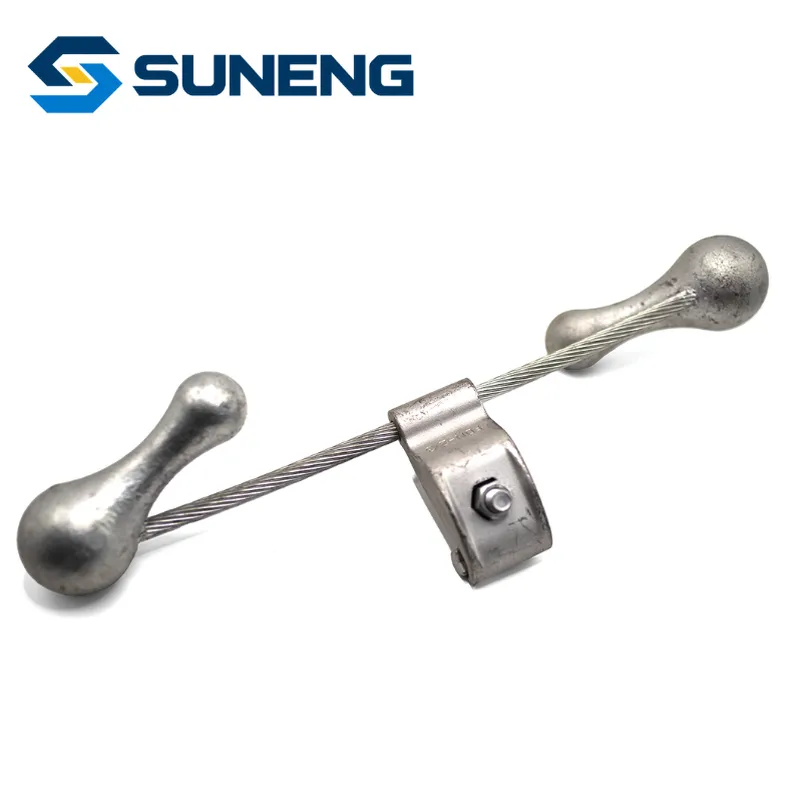
FDN Stockbridge-Type Vibration Damper
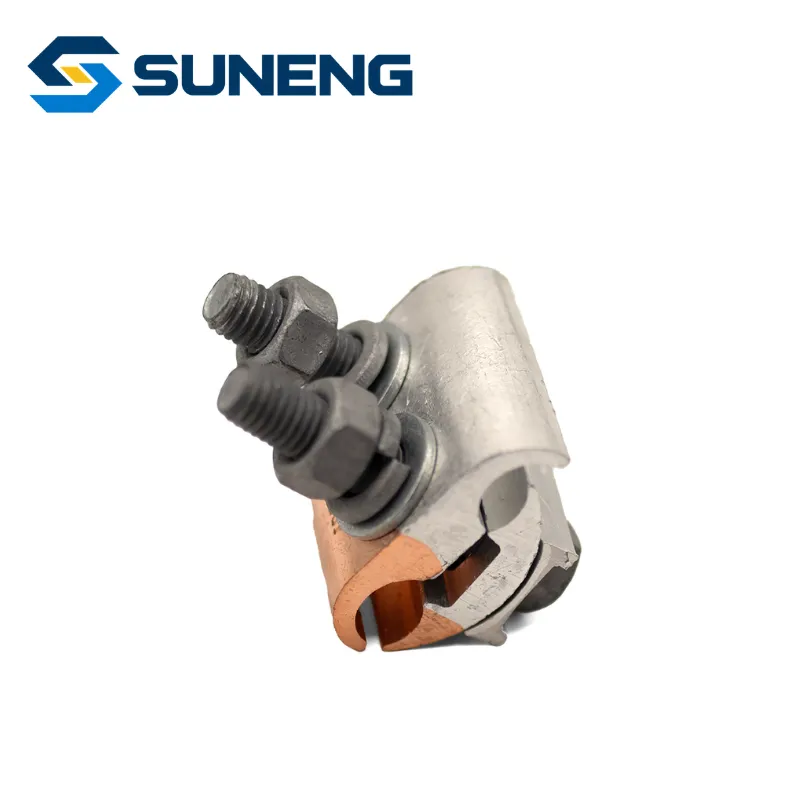
Jbtl-50-240 Aluminum Copper Parallel Groove Cable Clamp
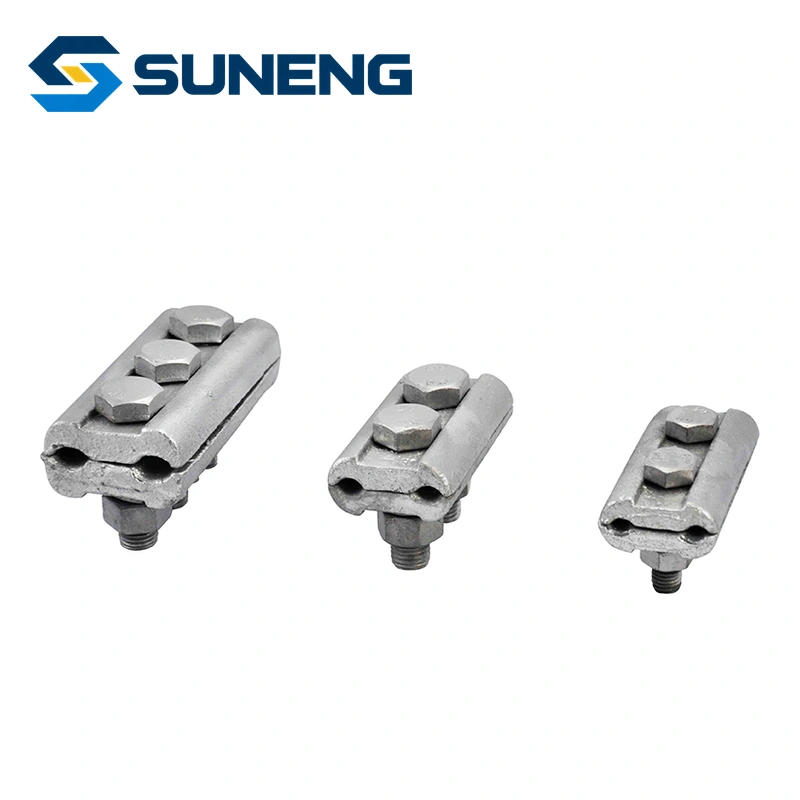
JB Aluminum Alloy Parallel Groove Clamp for Overhead Conductors
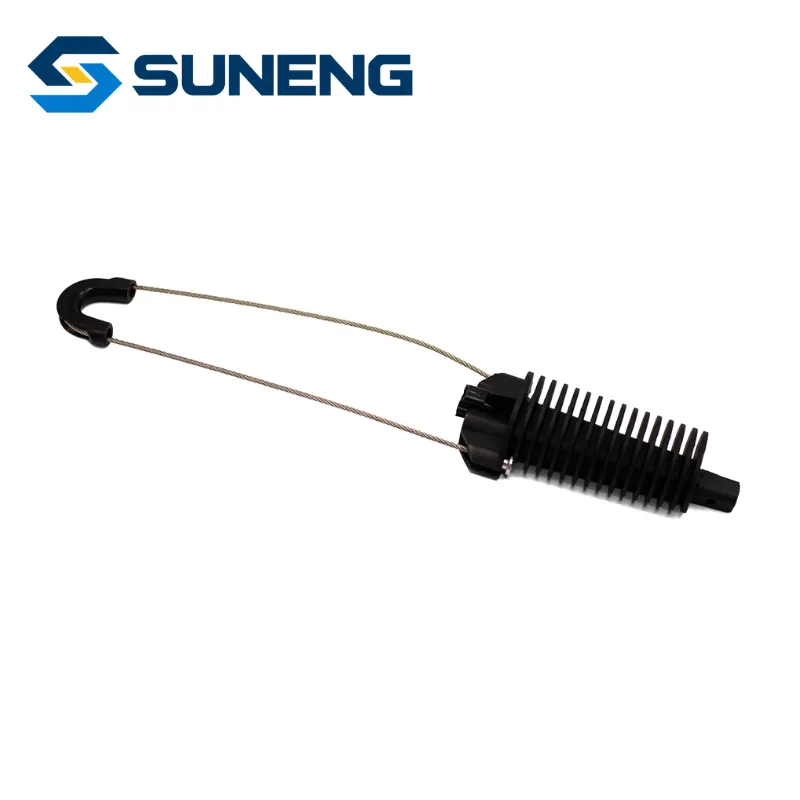
PA Series Suspension Strain Anchor Clamp Tension Clamp for Overhead Optic Line with IEC Standard
XGU Series Overhead Conductor Suspension Clamp
NXL-2 Wedge Tension Clamp for Overhead Lines
NY Two-Bolt Dead-End Clamp